

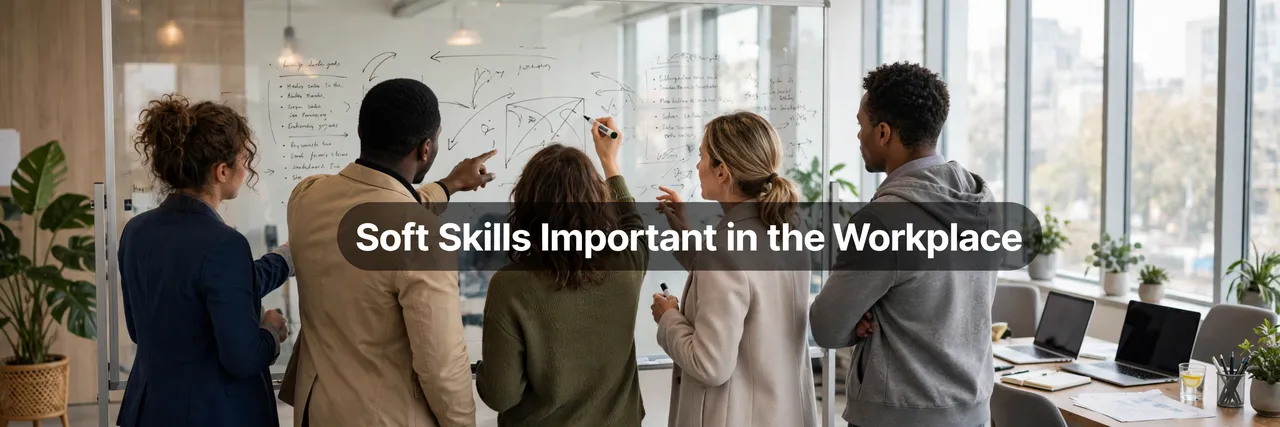
Soft Skills Important in the Workplace

Mr. Sengupta
Freelance Trainings Contributor
Soft skills are the interpersonal and behavioural skills that enable employees to communicate and collaborate with one another, problem solve and build professional relationships. Technical skills support an employees ability to do specific tasks within a role; soft skills impact an individual's effectiveness within an entire team and organisation. They are important in all industries because they have a bearing on productivity, professional relationships and career development.
What are soft skills?
What are soft skills are the individual skills possessed by someone which can aid one to communicate and get along with other people as well as handle work-related obligations efficiently. These skills differ from technical skills as they are applicable in several jobs or roles.
Analytical thinking, resilience, leadership, creative thinking, and empathy are among the core skillset highlighted by the World Economic Forum's Future of Jobs Report 2025.
What Are Some Examples of Important Soft Skills?
Here is a list of some skills that are very useful within the workplace environment:
• Communication: Communicating effectively.
• Collaboration: Working together with co-workers toward a common goal.
• Adaptability: Adapting oneself to change.
• Problem Solving: Addressing problems.
• Leadership: Being accountable and contributing towards effective teamwork.
• Time Management: Organizing oneself and meeting deadlines.
These Soft Skills Examples demonstrate how interpersonal abilities influence everyday professional performance.
Why Are Soft Skills Important for Career Progression?
Adding Soft Skills for Resume can enable candidates to prove their capability to interact effectively with other people. Communication, teamwork, adaptability, and critical thinking skills are appreciated by many employers along with technical skills.
Moreover, the List of Soft Skills may assist professionals in identifying their weaknesses and preparing for changes in the working environment.
How Do Employees Build Soft Skills?
Developing Soft Skills and Personality involves consistent practice, constructive criticism and professional learning. Organisations can implement Soft Skills Training through interactive sessions, mentoring, discussion groups, and work scenarios.
Soft Skills Training programs can assist employees in practising communication, conflict management, leadership, and interpersonal skills. The OECD also mentions communication, cooperation, and conflict management as some of the popular training areas in the workplace.
Conclusion
Soft skills are very vital in enhancing teamwork in the work environment and even career development in future. Combination of hard and soft skills ensures that employees develop confidence and adaptability to their organization.