

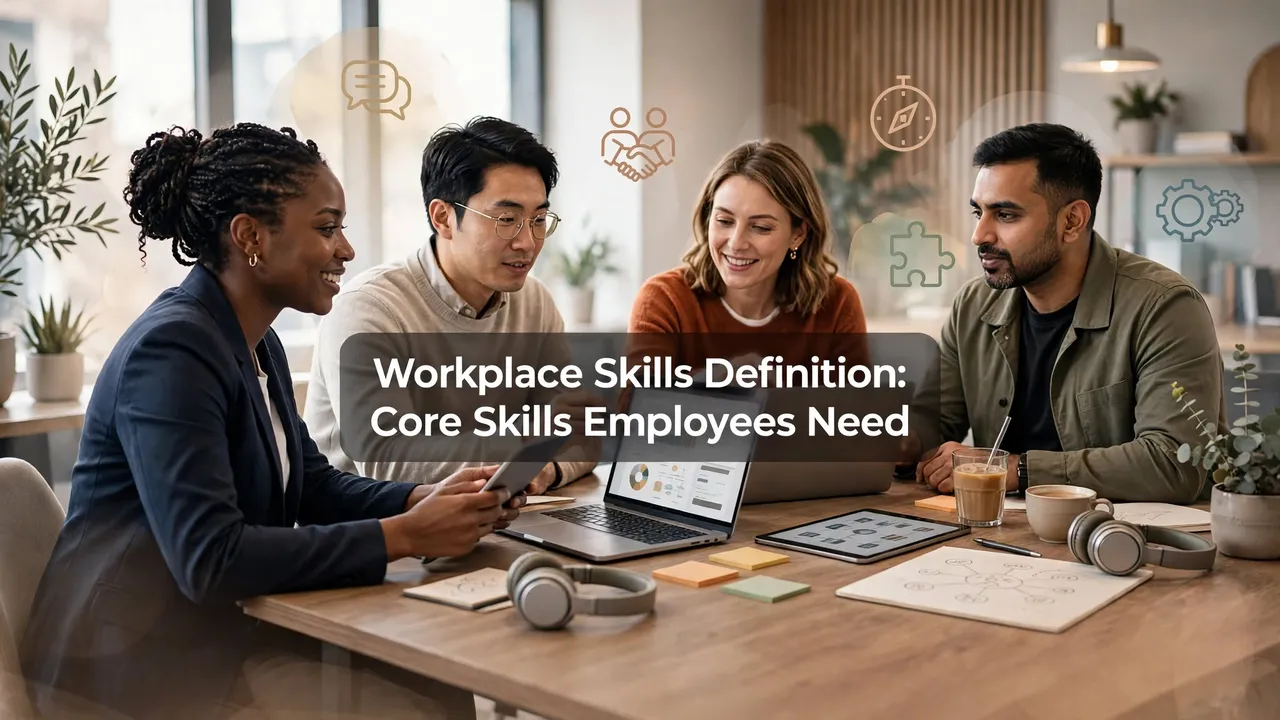
Workplace Skills Definition: Core Skills Employees Need

Mr. Sengupta
Freelance Trainings Contributor
Workplace skills are the technical knowledge, personal attributes and 'business behaviours' demonstrated by workers when completing duties at work. Whether it is a skill like technical know-how or communication and decision-making, time management and team playing, they make sure that employees can manage the day to day business operations and team communication and prepare for what the future may hold. For the enterprise, developing sound workplace skills results in increased productivity and continued growth.
What Are the Core Skills Employees Need?
Today's businesses demand both technical and soft skills. The World Economic Forum's Future of Jobs Report 2025 identified core skills including social influence, resilience, flexibility, analytical thinking and leadership as being most valued by employers worldwide.
Additional key skills include:
- Communication: Sharing information clearly and professionally.
- Troubleshooting: Detecting problems and coming up with solutions.
- Collaboration: Working as part of a team to accomplish common goals.
- With regards to new technologies, to new responsibilities, and to new environments.
- Workplace Technologies: Employing digital tools and workplace technologies.
- Leadership: Accountability, decision making, and team performance.
Understanding the Soft Skills Required by Employers helps organisations identify the behavioural skills and capabilities which can lead to success in the workplace.
How Can Businesses Develop Employee Skills?
This is a continuous process that doesn't involve "training" once. Organisations can implement structured Reskilling Programs that will prepare people for changing roles, new technology or business requirements.
The best development strategies are:
- Conducting regular skill-gap assessments.
- Organising practical workshops and mentoring sessions.
- Making available of up-to-date Training Materials for various job roles.
- Assessing staff performance via tasks and reflections.
This is where activities are used so that the learners can put into practice what they are learning.
Why Do Organisations Need Professional Corporate Trainers?
Expert trainers add subject understanding and authentic teaching strategies for the overall development of the staff. There are many facets upon which a business can look into the Best Freelance Trainers by experience, years of expertise, training expertise, communication skills, corporate experience.
The well-structured Freelance trainer empanelment process will further help the HR / L&D teams find the right trainers, confirm their profiles, evaluate their expertise and find the right trainers for any future learning needs.
Conclusion
Workplace skills are the cornerstone of employee success. Organisations that develop the right mix of technical training, people skills and professional development can create flexible teams, boost productivity and help prepare for the jobs of tomorrow.